
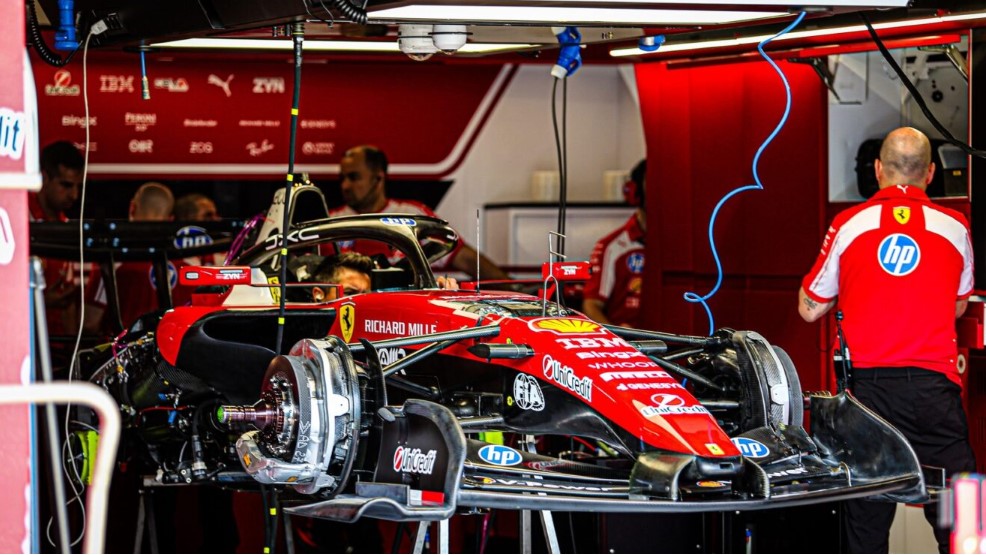

When people talk about modern racing engineering, audi f1 engine immediately stands out as a symbol of precision, ambition, and relentless development. In this article, I’ll explore the engineering decisions behind the audi f1 engine performance, why it matters on track, and how Audi’s Formula 1 ambitions shaped the way engineers think about speed.
Introduction to Audi’s Foray into Formula 1 Racing

Audi’s move into Formula 1 wasn’t just a technical project—it was a cultural one. It asked an entire organization to think at the pace of global elite motorsport while protecting the core values that made Audi successful in endurance racing and high-performance road cars. When I first tried to connect the dots between Audi’s past (especially its long-distance dominance) and its later F1 ambitions, I realized something important: Formula 1 demands a kind of engineering “frontier mindset.” It’s not enough to build a fast car; you must build a fast system that can survive scrutiny, regulation changes, and weekend-to-weekend variability. That mindset is exactly where the story of the audi f1 engine becomes more than a component—it becomes a flagship of how Audi approaches speed.
I also find that Audi’s entry into F1 has always been as much about learning as it is about winning. Even when results fluctuate, the data feedback loop is enormous. You end up with better materials, smarter thermal management, refined combustion strategies, and manufacturing insights that can ripple outward into production technology. That’s why discussions about audi f1 engine performance often feel broader than typical “spec sheet” talk. It’s about systems engineering and iteration at an extreme level.
Historical Context of Audi in Motorsports
Audi did not arrive at Formula 1 as a motorsport rookie with only marketing confidence. The company’s motorsport history—particularly in endurance racing—trained it to treat reliability as a strategic advantage, not a compromise. Endurance racing rewards consistency over the long run, and it taught Audi how to think in terms of drivetrain resilience, track-adaptive setups, and efficient energy usage. That background naturally influences how an audi f1 engine is approached: not just “how much power can we make,” but “how predictably can we deliver that power across multiple stints, changing temperatures, and varied race dynamics.”
Another thing that stands out to me is the discipline of packaging and integration. In endurance racing, there’s a constant tension between raw performance and survivability. In Formula 1, that tension becomes even sharper because teams operate under stricter resource constraints and intense performance pressure. Still, Audi’s historical experience meant the organization already understood one core reality: the engine is only part of the performance equation, and performance must be measured in real race conditions, not just on paper.
The Decision to Enter Formula 1
The decision to enter Formula 1 has often been framed as a quest for top-tier competitive validation, but I see it more like a strategic expansion of engineering identity. Audi already had a reputation for high-end performance and endurance credibility. Formula 1, with its global stage and relentless technological spotlight, offered a new arena where Audi could test its engineering philosophy under the harshest constraints—tight development windows, aerodynamic sensitivity, and complex power unit regulations.
Entering F1 also means accepting that technology must evolve quickly. With each rule change, teams face a “rebuild the future” moment. For an organization like Audi, that challenge is actually a catalyst. It forces cross-functional collaboration between combustion engineers, turbo specialists, software and controls teams, aerodynamicists, and manufacturing experts. So when you ask what the audi f1 engine represents, it becomes clear: it’s the engineered embodiment of willingness to iterate under pressure.
Overview of Audi’s Engineering Philosophy
Audi’s engineering culture is often described as methodical, disciplined, and data-driven. But what I think is most important is how that culture translates into racing: you don’t treat engineering as isolated departments competing for glory; you treat it like a unified system where every component influences the next. The audi f1 engine performance story isn’t only about horsepower—it’s about how power delivery interacts with aerodynamics, chassis response, traction, and driver confidence.
I also appreciate the balance Audi tries to strike between innovation and practicality. In racing, the temptation is to chase exotic breakthroughs. But teams win when breakthroughs translate into repeatable performance. That means Audi’s engineering philosophy tends to focus on technologies that can be validated quickly, integrated cleanly, and improved incrementally. The result is an engine approach that feels less like a gamble and more like a disciplined progression.
Audi F1 Engine Design and Specifications
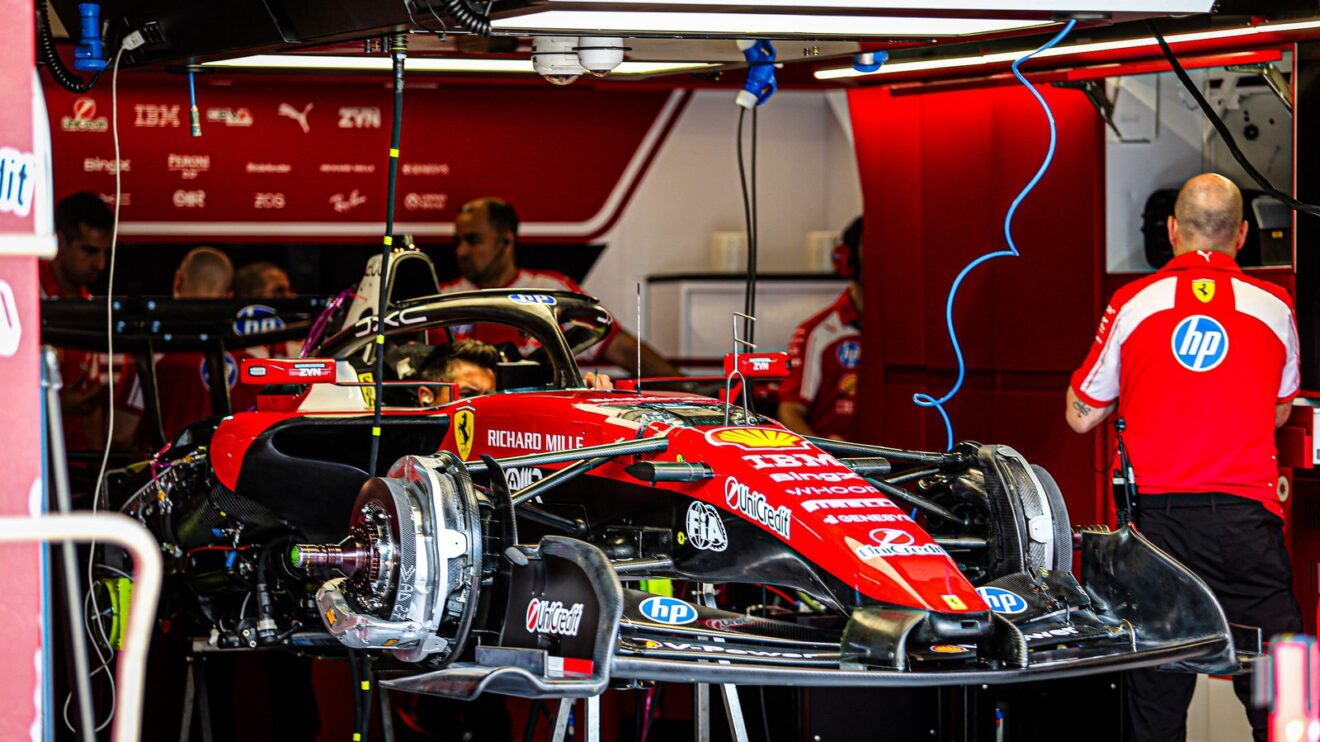
To understand the audi f1 engine, you have to view it as part of a regulatory landscape rather than a blank canvas. Formula 1 power units are shaped by rules about combustion, hybrid energy deployment, turbocharging, energy recovery systems, and fuel limits. That means the “specifications” aren’t just physical—they’re also strategic. The engine must operate within limits, but also deliver a decisive performance advantage when conditions align.
When I analyze the design of modern F1 power units, I’m always struck by how much of the performance comes from software and energy management—not just mechanical design. A strong engine is built, tuned, and then governed by control logic that coordinates throttle mapping, turbo boost, hybrid assist, and thermal targets. So, in practice, the audi f1 engine performance is the output of mechanical engineering plus real-time decision-making.
Engine Type and Configuration
At the core, Audi’s approach (like other competitive F1 teams) centers on a modern turbocharged architecture and the hybrid era’s power unit requirements. The engine configuration is typically built around a compact, high-output combustion unit paired with energy recovery components. Even if you don’t memorize every internal dimension, the key idea is that the package must deliver high specific output while remaining stable and controllable over race distances.
A turbocharged engine configuration brings immediate advantages—particularly in responsiveness and power density. But it also introduces challenges related to heat, wear, and transient behavior. That’s where high-precision design matters: materials must handle thermal cycling, and the combustion process must be optimized for both efficiency and peak power. In my view, the most impressive aspect of the audi f1 engine design is how it balances the conflicting demands of “rush the revs” driving style with the endurance-like requirement to remain reliable from sprint to sprint and corner to corner.
Technological Innovations in the Audi Engine
Innovation in an F1 power unit is never just about one dramatic breakthrough. It’s usually about dozens of smaller improvements that collectively add up. With the audi f1 engine performance focus, innovation can include improved combustion chamber design, enhanced turbo control strategies, better friction reduction through materials and surface treatments, and refined lubrication or cooling pathways.
Another underappreciated area is energy recovery integration. In hybrid systems, you can think of the engine as not only generating power but also managing “when to spend” and “when to save” energy. That requires advanced modeling, sensor feedback, and calibration strategies. The best teams can make the hybrid feel like a seamless extension of engine response rather than a switch the driver toggles. That’s the difference between a good system and a winning one.
Comparison with Competitor Engines
In Formula 1, comparisons are tricky because teams differ in philosophies: some prioritize peak power, others prioritize drivability, others focus heavily on reliability margins. When people ask about the audi f1 engine performance relative to competitor units, they’re usually trying to figure out what kind of trade-offs Audi made. For me, the most meaningful comparisons aren’t just about dyno numbers; they’re about how the engine behaves under pressure—during qualifying when everything is on the edge, and during races when compromises become expensive.
Competitor engines may present slightly different response curves, different thermal stability characteristics, and different efficiency profiles. Even small differences in efficiency can affect the number of engine modes available during a race. That’s why a thorough comparison needs to consider not only “how fast” but also “how consistently” and “how safely” performance can be delivered. A driver doesn’t just want power—they want predictable power, especially when tires and grip levels evolve during a stint.
Weight and Dimensions Specifications
Modern F1 power units operate under strict packaging constraints. The engine must fit within a tight chassis structure and integrate with hybrid components, cooling hardware, and the driveline. While exact engineering drawings are not publicly available for every build, the key reality is that weight and packaging influence everything: center of gravity, cooling airflow, suspension geometry clearance, and even aerodynamic ducting.
From a performance standpoint, keeping the audi f1 engine compact and light enough isn’t just about meeting minimum regulations—it’s about enabling better overall vehicle balance. I often think of the engine as the “center of system gravity.” Even if peak engine output is exceptional, a heavy or poorly integrated package can force compromises in chassis setup, which then affects cornering and traction. That’s why engine dimensions and integration matter as much as raw power.
Performance Metrics of the Audi F1 Engine
Performance in F1 is a multi-dimensional concept. Yes, power and torque matter, but the real story is how that power is delivered: across engine modes, throttle transitions, track temperatures, and hybrid deployment decisions. When people say audi f1 engine performance, they often imagine a single headline number. But the reality is closer to a performance “profile” that includes responsiveness, efficiency, reliability, and the ability to repeat results over race weekends.
I personally find it helpful to treat engine performance like an instrument panel rather than a stopwatch. You measure how quickly it reaches power, how smoothly it delivers it, how long it can keep delivering it, and how the car reacts when the driver requests changes. A great engine feels like a confident partner. It reduces the mental burden on the driver and lets them focus on braking markers and racing lines.
Power Output and Torque Characteristics
The power output of a modern F1 power unit is influenced by the combustion process, turbo efficiency, hybrid energy deployment, and control strategy. Torque, meanwhile, is about drivability—how effectively the engine pulls through different RPM bands and how consistent the thrust feels when you rotate the car on corner exit.
In discussing the audi f1 engine performance, it’s important to focus on the torque curve shape, not only peak values. A strong torque band can improve acceleration out of slow corners, where traction is precious and time gaps are often decided. Meanwhile, power at higher RPM helps on straights and during qualifying runs when the car is kept in the upper rev range.
What makes competitive engines special is not merely the height of the curve—it’s how “flat” or “usable” the curve is. A driver wants predictable thrust at the exact moment traction breaks free, and a well-calibrated engine reduces the risk of wheelspin or bogging. That’s why torque characteristics are often a better predictor of lap time than maximum horsepower alone.
Acceleration and Top Speed Capabilities
Acceleration is where engine and vehicle dynamics merge. An engine with excellent power can still produce mediocre acceleration if traction is limited or gearing doesn’t match the track profile. Conversely, a slightly lower power engine can outperform if it offers stronger usable torque and better drivability.
Top speed capabilities, meanwhile, depend on power and aerodynamic drag balance. An F1 car with strong engine output can reach higher speeds, but if aerodynamics produce too much drag, top speed becomes limited. So audi f1 engine performance in a real lap context is always paired with aerodynamic efficiency and gear ratio selection.
I’ve noticed that teams sometimes focus too narrowly on “straight-line numbers” while underestimating how engine response affects exit speeds and mid-corner stability. In F1, acceleration isn’t just from 100 to 200 km/h—it’s from braking zone to corner exit, repeatedly, while tires gradually change characteristics. A great engine helps you maintain that rhythm lap after lap.
Reliability and Durability Tests
Reliability is often the quiet hero of F1 performance. An engine that can be pushed for one lap isn’t enough if it can’t survive the race. That’s why durability testing is extensive: teams run controlled stress cycles, thermal soak experiments, component endurance runs, and real-world track sessions designed to simulate race wear.
For the audi f1 engine, reliability translates into predictable output across the weekend and into safe operating windows. The hybrid system adds complexity too—components must not only function but function without causing thermal runaway or unpredictable energy deployment behavior. Reliability is also tightly linked with performance calibration. If an engine is run too aggressively, it may deliver peak power but force conservative mode limitations later.
In my own engineering reading, I’ve come to respect the discipline of teams that treat reliability as a performance amplifier. Reducing the chance of penalties, preventing degradation surprises, and minimizing mechanical uncertainty can unlock more aggressive strategies overall. In other words, an engine that “lasts” often wins by enabling better choices.
Fuel Efficiency and Engine Management
Fuel efficiency is not just about economics—it’s about race strategy. Formula 1 regulations enforce fuel flow limits, and energy recovery/hybrid deployment adds another layer of complexity. The best audi f1 engine performance isn’t necessarily the highest power at all times; it’s the ability to select the right power/efficiency trade-offs across different phases of the race.
Engine management software governs everything: when to deploy hybrid energy, how to regulate turbo boost, how to keep combustion stable, and how to manage temperatures to preserve component life. Fuel efficiency also affects how many times the team can run in certain power modes before needing to back off.
What I find fascinating is how the same driver can “feel” efficiency through changes in engine response. Even if maximum power isn’t reduced drastically, a shift in mapping can alter how sharply the car responds. That means engine management isn’t purely internal—it influences driver confidence and driving style. And in a sport where marginal gains decide outcomes, that driver-engine relationship becomes part of performance.
Aerodynamics and Integration
Even the best audi f1 engine can be “wasted” if the car’s aerodynamic system can’t exploit its potential. In Formula 1, the engine’s power is only as valuable as the car’s ability to convert it into acceleration, traction, and speed through corners. Integration—how the engine interfaces with cooling, airflow, packaging, and chassis balance—is where many performance gains are either created or lost.
When I watch F1 on track, I’m always amazed by how subtle aerodynamic changes can alter engine behavior indirectly. Cooling airflow affects turbo temperatures and charge-air density, which can influence engine output and knock safety margins. Aerodynamics also alter the driver’s ability to apply throttle earlier on corner exits, which changes the effective load on the engine and hybrid system.
Role of Aerodynamic Design in Engine Performance
Aerodynamics and engine performance are linked through thermal management and drag. Turbocharged engines are sensitive to intake charge temperatures and exhaust system conditions. If airflow design doesn’t support stable thermal targets, the engine may require conservative control strategies. That can reduce peak output or limit deployment of hybrid energy.
Also, the engine’s packaging affects airflow around the sidepods, rear structures, and diffuser. Audi’s integration approach—like any top F1 team—must ensure that the aerodynamic flow field supports efficient cooling while minimizing drag. The goal is to keep the engine at optimal operating conditions without sacrificing the car’s aerodynamic efficiency.
In my view, it’s not enough to say “aero affects speed.” In reality, aero affects the engine’s ability to remain in the sweet spot. If a cooling airflow change results in even slightly lower temperatures, the engine can operate with greater confidence, potentially allowing more aggressive torque requests or better efficiency. That’s why the phrase audi f1 engine performance should be read as “system performance,” not only mechanical output.
Integration with Chassis and Overall Vehicle Dynamics
Integration is where the engineering becomes tangible to the driver. An engine isn’t floating in space—it connects to mounts, affects center of gravity, and interacts with suspension loading. Chassis tuning must account for engine mass distribution and stiffness properties.
The drivetrain also influences traction. The way the engine delivers torque at the wheels affects weight transfer during acceleration. If torque is too peaky or delivered with poor modulation, traction becomes harder to manage. That’s why integration between the audi f1 engine calibration and the chassis setup is crucial. Even if the engine is physically capable of high output, it must be “tuned” into the car’s behavior.
When integration is done well, the driver experiences a more predictable response: the car rotates smoothly, applies power cleanly, and doesn’t suddenly change balance when the throttle crosses a certain threshold. That predictability reduces driver workload and supports more consistent lap times.
Impact on Handling and Cornering Speed
Cornering speed isn’t just tire grip—it’s grip plus confidence plus balance. An engine that supports strong and controllable torque at corner exit helps the driver keep the car stable under power. If the engine delivers thrust smoothly, the car can be driven with less correction, preserving tires and maintaining momentum.
From the audi f1 engine performance standpoint, the key is that performance shows up in places you don’t always expect. A slightly improved torque request resolution or a better hybrid deployment strategy might not increase top speed, but it can increase exit speed by allowing earlier throttle application. That leads to faster lap segments, which compound over a lap.
I personally enjoy analyzing how drivers “catch” the car when it’s mid-corner. The engine’s torque delivery influences the longitudinal load on the tires. If torque is managed smoothly, the vehicle remains predictable. This is especially critical at tracks with frequent traction events—where the driver repeatedly transitions from braking to acceleration and where small changes become measurable.
Future Developments and Innovations
Formula 1 is moving quickly toward higher efficiency, tighter sustainability targets, and increasingly sophisticated hybrid control. If you’re looking at where the audi f1 engine performance might go next, you have to look at the future not as a single technology jump, but as an ecosystem of improvements: materials, software, combustion stability, energy recovery efficiency, and thermal design.
Audi’s future direction is also tied to broader industry trends. Automakers are using motorsport as a testbed for clean energy technologies, and hybrid systems often become a stepping stone toward advanced energy management strategies in production vehicles. That means “future developments” isn’t only about faster lap times—it’s about scalable innovation.
Plans for Advancements in Engine Technology
In future engine development, the emphasis is likely to remain on optimizing combustion efficiency, reducing internal friction, improving turbo response, and increasing reliability margins. Even if regulations limit certain design freedoms, teams always find ways to improve the performance within constraints.
A major focus will likely be on refined engine management algorithms—calibration that better predicts track conditions, responds to driver inputs instantly, and coordinates hybrid deployment with traction and aerodynamic states. Advanced sensing and better data-driven control strategies can help the engine deliver more usable performance rather than merely more peak power.
For the audi f1 engine, the forward path would logically include incremental improvements that reduce variability. In my experience, the fastest teams are often those that eliminate “performance noise”—situations where the engine response changes because of thermal or environmental conditions. Reducing variability can turn consistent fast laps into repeatable results.
Audi’s Position in the Evolving F1 Landscape
Audi’s position in F1 must be understood in relation to the shifting balance of innovation between teams and manufacturers. The sport is increasingly shaped by alliances, supplier capabilities, and the ability to scale manufacturing and simulation. If Audi wants long-term dominance or even sustained front-running competitiveness, it must ensure that engineering talent and resources translate into rapid development cycles.
From a creative and strategic perspective, I think Audi’s best advantage is the breadth of its engineering culture. Audi has experience across different motorsport formats, which can provide unique insights into durability, energy management, and driver feedback loops. The key is to adapt those lessons to the most cutting-edge aspects of F1—especially the hybrid and software layers.
In practical terms, the audi f1 engine performance conversation becomes part of brand identity. If Audi can demonstrate consistent improvement—especially in efficiency, thermal robustness, and drivability—it reinforces its credibility as an engineering leader rather than a newcomer chasing headlines.
Sustainability Initiatives and Hybrid Technologies
Sustainability isn’t a marketing tagline in motorsport; it influences engineering choices. Hybrid technologies, in particular, are a natural bridge between racing performance and road-car efficiency. The energy recovery and management systems developed for F1 represent a high-intensity lab for understanding how to harvest, store, and deploy energy effectively.
Audi’s sustainability initiatives align well with the direction F1 is taking: improved fuel efficiency, higher efficiency targets, and increasingly sophisticated energy recovery. Even though racing engines are still engineered for speed, the underlying technologies—combustion efficiency improvements, reduced friction, and advanced thermal management—are inherently transferable.
I also think there’s a psychological element to this. When teams believe their development work contributes to sustainability goals, there can be more internal motivation to build beyond “just enough for the next race.” That can lead to deeper innovation in systems-level engineering. So while the audi f1 engine is built for lap times, it can also contribute to broader technological progress that matters outside the track.
Conclusion
Audi’s engagement with Formula 1 showcases an engineering story where ambition meets disciplined systems thinking—because audi f1 engine performance isn’t just about peak horsepower, it’s about torque delivery, hybrid energy management, thermal stability, integration with aerodynamics, and the reliability required to convert speed into results across an entire season, while also pointing toward future innovation shaped by efficiency and sustainability goals.
🏁 Shop The Collection
Nico Hulkenberg Audi F1 Custom Polo Shirt
Nico Hulkenberg 2026 Audi F1 Costume Racing Suit
Audi Team F1 2026 Edition TShirt
About Us
Kozmozcyber bridges the stories and lifestyle surrounding motorsport, offering insights and community engagement beyond the race – aligning fans with the history and culture of racing.