
The Legacy of Silk Cut Jaguar Le Mans

The context behind the name—more than branding
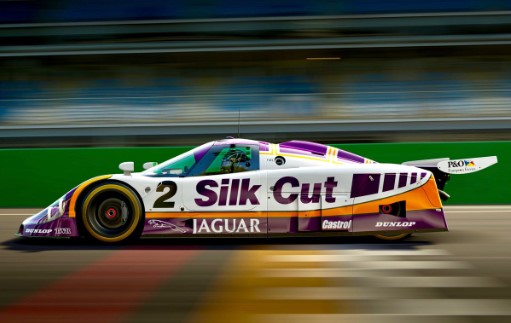
Every racing fan eventually learns that motorsport branding can be a disguise for deeper truths. The livery, the sponsor name, the colors—these are the public face of a private machine working behind the scenes. When you connect “Silk Cut” with Jaguar at Le Mans, you’re really connecting a specific moment in time: a well-funded program trying to translate excellence in development into lasting results on the world’s toughest track. I’ve always believed that great racing teams have a “philosophy of handling uncertainty.” In endurance racing, uncertainty is constant: weather shifts, safety car windows, mechanical warnings that don’t become problems until they suddenly do. The silk cut jaguar le mans era represented a belief that uncertainty could be managed through process—through simulation, testing discipline, and a pit crew trained to react instantly. But there’s also a human layer. Drivers don’t just compete; they adapt. They learn how a car behaves as fuel changes, how braking zones evolve as brakes fade, how tire feel becomes less predictable after traffic. The livery might change year to year, yet a team’s internal language remains. That continuity is what makes the silk cut jaguar le mans narrative feel like more than a playlist of race results. It feels like the evolution of a craft.Jaguar’s endurance mindset—speed with survival instincts
Jaguar’s strength in endurance racing comes from a particular blend: confidence in performance without forgetting that the clock is as relentless as the competition. Le Mans isn’t simply about having the fastest car; it’s about having the most dependable interpretation of speed. That includes everything from thermal management to gearing choices to how the engine is asked to behave for long stints. From a personal perspective, I’ve always found it fascinating how endurance teams treat “slow moments.” In a sprint race, “slow” is failure—something to be corrected immediately. In Le Mans, slow moments can be a tactic: lifting slightly to keep temperatures stable, conserving brakes to prevent a fade late in the race, and protecting tires to maintain consistent lap times rather than chasing a perfect peak. In that sense, the silk cut jaguar le mans identity becomes almost symbolic of balance. Jaguar’s engineering approach aimed to keep the car stable in the rhythms of a long race, while drivers developed confidence to manage the car’s limits rather than repeatedly flirt with them. That is how you create longevity at the front: the car remains within its optimal behavioral envelope when everyone else starts to fall out of sync.The atmosphere of Le Mans—where legends are built
Even without referencing any specific season, it’s hard to explain Le Mans to someone who hasn’t lived it. The paddock feels like a living workshop, half engineering lab and half theater. The crowds aren’t just spectators—they’re part of the event’s energy, pushing the atmosphere into something bigger than sport. When I think about silk cut jaguar le mans, I imagine that energy wrapped around a machine that’s being prepared with surgical attention. You hear impacts, rattles, torque wrenches, the soft communication between engineers and crew members. Then you see the car roll out onto the track, and suddenly the physics takes over. Tires heat, aerodynamic balance settles, and the car transforms from a tool into an instrument. Le Mans also has a unique kind of drama: you can be fast and still lose; you can be unlucky and still be remembered. That’s why the silk cut jaguar le mans name sticks. It symbolizes a participation in that drama—with ambition, with professionalism, and with the willingness to fight through uncertainty rather than retreat from it.What Made the Silk Cut Jaguar Le Mans Winner So Special
What “winning” really means at Le Mans
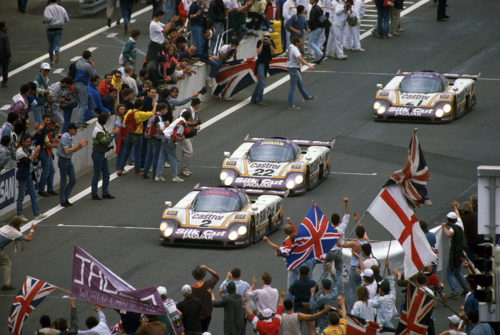
People outside motorsport sometimes underestimate endurance racing’s unique definition of victory. At Le Mans, speed is necessary, but victory often belongs to the team that executes the best plan under stress. Stress arrives in multiple forms: component wear, changing track grip, traffic management, driver fatigue, and the constant pressure of keeping close to rivals without forcing errors. I like to think of Le Mans as a battle between competing philosophies. One team might believe in aggression—pushing the pace continuously, hoping the car holds up. Another might aim for consistency, accepting minor time losses to reduce variance. In practice, the best teams often combine both approaches: aggression when the window opens, caution when it would reduce overall risk. When fans speak about the silk cut jaguar le mans winner, they’re acknowledging that Jaguar—or any team in that winning role—must have solved many small problems at once. A win can be the result of one spectacular decision, but more often it’s an accumulation of smart, disciplined actions that keep you in the right position when the race inevitably becomes chaotic.The engineering and strategy behind victory
A Le Mans winner is rarely “only fast.” To win, a team needs the car to deliver repeatable lap times across stints, and it needs the ability to adjust quickly when conditions shift. Tire wear is an enormous variable. A set that looks healthy in clean air can degrade differently when you’re stuck in traffic. Brake temperatures can make your pedal feel different in the middle of the night than it did earlier. Even aerodynamic balance can shift slightly with cooling and fuel burn patterns. In the silk cut jaguar le mans winner narrative, engineering discipline and strategic clarity should be the protagonists. The pit stop window is another crucial element. A team can spend the whole race preparing for a stop that lasts seconds—but the success of that stop is built on everything that came before. Pit crews don’t just “work fast.” They work in harmony with the driver’s needs, the car’s status, and the timing signals from the pit wall. Personally, I’ve always been impressed by how pit wall communication influences driving style. When the car is called in for service, the driver must manage the final laps—often at a pace that maintains tire and brakes while still keeping the team’s timing plan intact. That coordination is what turns a decent race into a winning performance.Why winners become legends—memory and meaning
A winning team becomes a legend because it creates a coherent meaning from complexity. Le Mans is complicated, and it’s easy for fans to feel lost unless there’s a narrative thread. That’s where the silk cut jaguar le mans winner becomes a cultural anchor. The win is a clear outcome, yes—but it also represents mastery over chaos. Legend status grows when fans see that the team didn’t just benefit from luck. Even if luck is involved—Le Mans is never purely deterministic—the winning program still demonstrates competence. It demonstrates that the car had pace, the drivers had composure, and the strategy team had the courage and wisdom to execute when it mattered. I’ve noticed that when people talk about winning eras, they don’t merely recite dates. They talk about the feeling of watching the car move through the circuit. They mention how it looked stable at high speed, how it sounded at certain throttle openings, how it seemed to “fit” the track’s rhythm. Those sensory details matter because Le Mans is as much about atmosphere as it is about spreadsheets. To make the idea of “winning” more concrete, here’s a simple data snapshot of the kind of factors that commonly decide endurance outcomes—use it as a framework for understanding why teams become silk cut jaguar le mans winner candidates.| Victory Factor | Why it Matters at Le Mans | What Top Teams Tend to Do |
|---|---|---|
| Reliability across stints | Mechanical issues compound over 24 hours | Conservative mapping, robust setup, proactive monitoring |
| Consistent lap-time window | Winning margins often come from reduced variance | Tire/brake management, stable aerodynamics, disciplined driving |
| Pit stop efficiency | Time lost in the pits is time stolen from rivals | Fast, practiced crew work; precise planning on timing windows |
| Strategy under changing conditions | Weather/safety cars alter the optimal plan | Flexible decision-making, real-time adjustments |
| Driver composure | Fatigue increases error probability | Shared driving rhythm, communication, and mental reset routines |